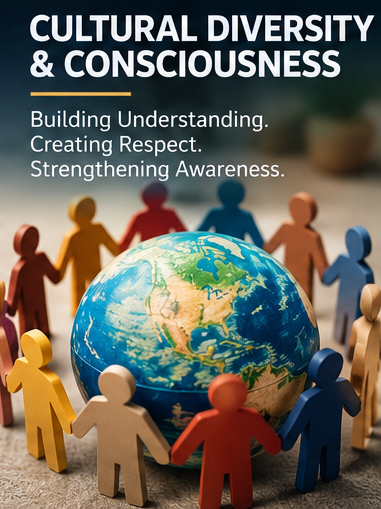


CULTURAL DIVERSITY & CONSCIOUSNESS
Building Understanding. Creating Respect. Strengthening Awareness.
Culture is not simply where we come from. It is everything we experience along the way.
Every individual enters the workplace carrying a unique collection of experiences, beliefs, values, traditions, and perspectives.
These influences shape how we interpret information, communicate with others, develop relationships, and understand the world around us.
Although conversations about cultural diversity often focus on visible characteristics such as race, ethnicity, age, or gender, culture extends far beyond what can be observed.
Our families, communities, education, professions, social environments, religious experiences, economic circumstances, and exposure to technology and media all contribute to the development of our cultural identities.
Understanding these influences is essential to developing meaningful relationships and navigating increasingly diverse professional environments.
This interactive course introduces participants to the concept of cultural consciousness: the intentional practice of recognizing how cultural experiences shape our perceptions while developing greater awareness of the perspectives and experiences of others.
Participants examine the historical and social influences that contribute to cultural development, including economic opportunity, religious freedom, conflict, environmental conditions, security, and symbolism.
Through facilitated discussions, practical activities, and real-world examples, participants explore how cultural assumptions, implicit biases, communication differences, and personal experiences influence workplace interactions.
The course challenges participants to move beyond simply recognizing cultural differences and toward developing the awareness necessary to engage respectfully and effectively across cultures.
Rather than treating culture as a fixed identity, participants are encouraged to understand it as an evolving collection of experiences that continues to influence personal and professional development.
-
Participants will explore how to:
Define culture and recognize the various influences that shape cultural identity.
Examine how personal experiences, values, and beliefs influence worldview.
Understand the difference between cultural awareness and cultural consciousness.
Recognize how implicit and unconscious biases influence perceptions and behaviors.
Identify cultural assumptions that contribute to workplace misunderstandings.
Examine how historical, social, and environmental factors influence cultural development.
Recognize similarities and differences across cultural experiences.
Strengthen cross-cultural communication and interpersonal relationships.
Explore how organizational values can support respectful and inclusive workplace environments.
Apply cultural consciousness principles to everyday professional interactions.
Organizational Value
Organizations benefit when employees develop greater awareness of the cultural influences affecting workplace relationships, communication, and collaboration.
This course supports efforts to strengthen mutual respect, reduce unnecessary misunderstandings, improve employee engagement, and develop organizational environments where diverse perspectives contribute to collective success.
The Takeaway: Understanding another person's culture begins with recognizing that our own experiences are not the only way to interpret the world.